
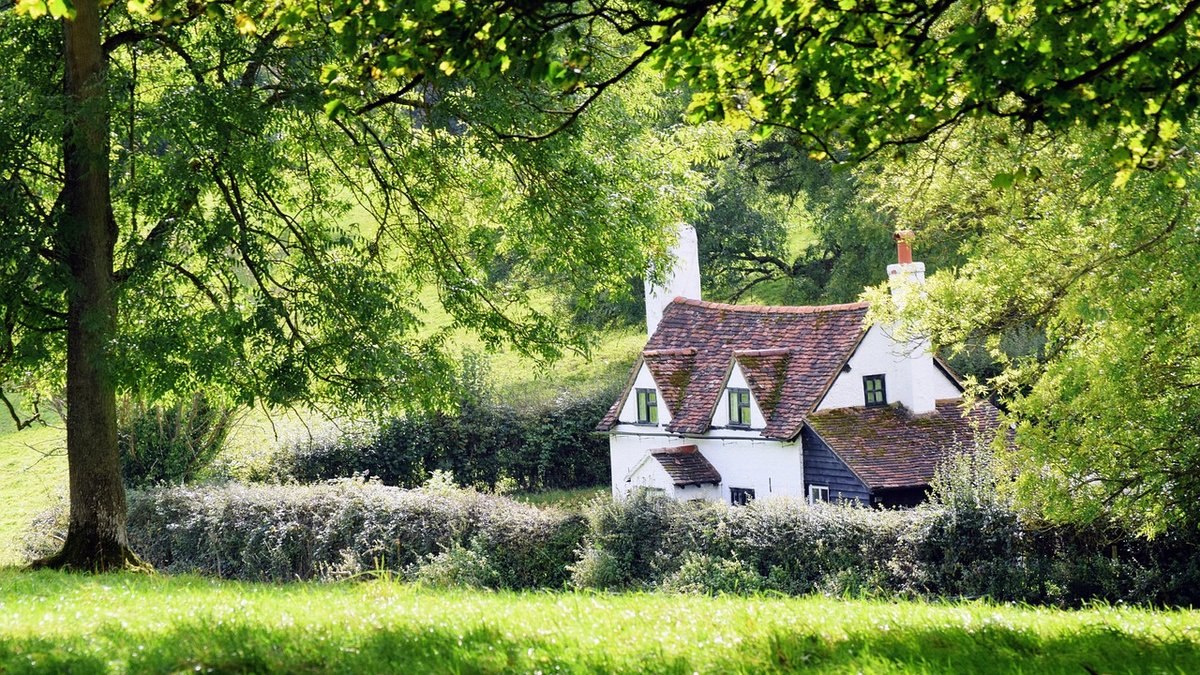
A fence marks a line. A hedge does that and a great deal more besides. Along a boundary it slows the wind, filters noise and dust, soaks up rain, holds a bank together and — if you plant the right mix — feeds and shelters a surprising amount of wildlife on a strip of ground barely a metre wide. Give it five or six years and it will also be the most interesting thing on the plot.
The trick is not to plant a hedge of a single species. A block of one shrub flowers and fruits all at once, then offers nothing for the rest of the year. Mix in hawthorn, hazel and blackthorn and you stagger the bounty from January catkins to November sloes, with somewhere to nest, roost and hide in between. All three are British natives, all three are tough as old boots, and all three will grow almost anywhere in the country.
Aim for roughly half hawthorn, a quarter hazel and a quarter blackthorn. If you fancy a little more variety, add the odd field maple, dog rose or guelder rose — but keep the three natives as the bulk of it.
Order bare-root whips, 60–90cm tall and of British native provenance, for delivery between November and March. Bare-root plants establish far better than potted ones and cost a fraction as much. Before you dig anything, check who owns the boundary and whether any covenant or restriction applies, and keep your planting line at least 45cm clear of fences, walls and buried services.
For spacing, a double staggered row gives the thickest, most stockproof hedge: about 30–40cm between plants within each row, 40cm between the rows, which works out at roughly five plants per metre. If you simply want a garden boundary rather than something to keep livestock in, a single row at three plants per metre will do, though thicker is always better for wildlife.
Mark out your line with a taut string, then strip the grass from a strip about 60cm wide and fork the ground over to relieve compaction. Plant each whip at the same depth it sat in the nursery bed — you can usually see a soil mark on the stem — firm the soil around the roots with your heel, and water well.
After planting, mulch with 5–8cm of well-rotted manure or bark chip, keeping it clear of the stems so they do not rot, and fit a spiral guard and cane to every plant if rabbits or deer are about. Autumn planting is ideal: the soil is still warm, the roots keep growing, and the plants get a head start before spring.
Water through the first two summers. In dry spells, a full watering can per plant once a week is worth more than a daily sprinkle.
Here is the counterintuitive bit: cut every whip back by about a third immediately after planting. It feels brutal, but it forces the plants to branch from the base rather than shoot upwards, which is what gives you a dense hedge with no gaps at the bottom.
After that, leave it alone for a couple of years. Then trim in late winter — February is ideal — and never between March and August, when birds are nesting. Cutting a hedge in the breeding season risks disturbing active nests and is best avoided as a matter of course.
Trim every second or third year rather than annually, and take no more than a third off at a time. Shape the hedge like the letter A: wide at the base, sloping sides, domed top. Light then reaches the bottom, and the hedge stays leafy all the way down instead of going bare and leggy. If your hazel gets thick, coppice a section on rotation every few years and it will regrow with fresh vigour.
Give it a decade and you will have a boundary that works hard in every month of the year: a windbreak, a screen, a larder and a nursery, all grown from a few dozen whips and a morning's digging.

Hi, my name is Anthony kuber. I am artist and fashion designer.
I love to travel and writing blogging.
Your email address will not be published. Required fields are marked *
Software Developer & Writer
Hey, I'm Diva, a developer and writer blending code and creativity. I'm driven by a deep curiosity and a relentless pursuit of excellence. Join me as I craft digital solutions and captivating stories.


